
A piece of slightly negative news can cause a serious setback, warns Debashis Basu.

These schemes are a good choice for investors contemplating a large investment in equity funds. Instead of investing all the money in one go, they can do so in a staggered manner by parking it in these schemes and then transferring it to equity mutual funds through a systematic transfer plan.

Domestic equity investors' wealth eroded by more than Rs 4.43 lakh crore on Monday as fears of a financial contagion triggered by one of the biggest bank failures in the US roiled market sentiments. After a strong opening, Indian stocks went into a tailspin with the benchmark 30-share BSE Sensex tumbling nearly 900 points to close at 58,237.85 points -- sliding for the third straight trading session. The NSE Nifty too declined 258.60 points to end at 17,154.30 points.
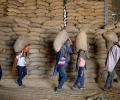
Domestic exporters on Monday expressed concerns over the crisis in Bangladesh and said the developments in the neighbouring country would have implications on bilateral trade. However, exporters expect that the situation may normalise soon. According to exporters, they are already facing disruptions in exports to Bangladesh due to a shortage of foreign exchange in that country.

'There are occasions when the prices of individual items like food raise inflation; then supply-side measures must be taken.' 'But if there is continued inflation, it means liquidity is aggravating the situation.'

The comment was in response to a June 19 Reuters story citing sources with knowledge of the matter as saying that India planned to clear some oil payments to Iran through the United Arab Emirates central bank.

Equity markets rallied after softer-than-expected inflation data in the US and UK rekindled hopes of the end of the rate-hiking cycle by major central banks. The soft inflation reading drove down bond yields and the US dollar, whetting the appetite for risky assets. The 10-year US bond yield fell below 4.5 per cent after topping 5 per cent less than a month ago.

'Unlike in the sporting arena, where sports federations moved from partisan to impartial referees, in Indian democracy's biggest festival, it appears we are moving backward from unbiased and objective to one-sided and partisan,' observes Nilanjan Mukhopadhyay.

tailwinds of a remarkable year and handsome investor returns, Indian equities are set for an eventful journey in 2024, with a slew of local and global cues -- varying from interest rates to Lok Sabha polls to geopolitical happenings. Analysts are of the view that the bull run in the domestic equity market will continue, and over the next 3-6 months, the benchmark indices -- Sensex and Nifty -- could climb up to 7 per cent. In 2023, the 30-share BSE Sensex jumped 11,399.52 points or 18.73 per cent, and the NSE Nifty climbed 3,626.1 points or 20 per cent.

There are already some signs of stress in this market.

'Continue with your SIPs to get the benefit of lower average prices in this challenging market environment.'

Strong dollar will impact financial system in India.
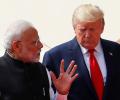
Delhi's appeasement strategy may now translate as more mega arms deals with the US, generating substantial business and job creation in the American economy. Make no mistake, Americans will use it to pressure India, predicts Ambassador M K Bhadrakumar.

Investors globally pulled out more than $3 billion from equity funds focused on Emerging markets including India in a week amid concerns over the US Federal Reserve's plan of curtailing its stimulus drive starting later this year.

'Das is friendly, but he finally does what he does. The quality of engagement is very good.'

When the Centre tries to encroach upon the subjects that are under the prerogative of the state, or where the centre tries to evade from any responsibility guaranteed to a state through a constitutional provision/obligation, it poses a threat to federalism.

If global stagflation takes hold, it will force China to accelerate its reforms to float its currency and create a single, independent and market-based financial system. When that happens, the dollar will collapse.

The Indian economy recovered from the Covid-induced downturn during 2022 and is poised for further improvement in the coming quarters though downside risks emanating from geopolitical tensions, strengthening dollar and elevated inflation will continue. The positive trajectory in the growth trend and improved fundamentals will help the nation in neutralising the impact of global headwinds which are expected to have a bearing on the country's exports in the months to come. The challenges before the government and the Reserve Bank in the new year would be to arrest inflation, check declining value of rupee against US dollar and promote private investment and growth, with a view to ensure that the country remains one the fastest growing major economies of the world.

While the economy seems to be on a firm growth path, the fight against inflation is not over yet. Shaktikanta Das seems to be in no hurry. After playing well through a five-year Test match, he doesn't want to get out hit wicket, observes Tamal Bandyopadhyay.

Elevated food price-led inflation could become a sore point for markets, which they seem to be ignoring at current levels, observe analysts. Retail inflation in India - as measured by the Consumer Price Index (CPI) - came in at a three-month high of 6.52 per cent in January 2023, compared with 5.72 per cent in December and 5.88 per cent in November 2022. The inflation print for February, according to Madan Sabnavis, chief economist at Bank of Baroda, will be critical for the Reserve Bank of India's monetary policy committee.

Waves of foreign portfolio investments worth over Rs 51,000 crore splashed into the Indian market in 2021 as overseas investors turned net buyers of domestic securities for the third straight year while excess global liquidity and other factors steered the ebb and flow of their investing ways. With the global financial system still flush with liquidity, emerging market assets, especially equities, might well remain the preferred investment avenue for many more months to come, experts opined. As the equities sizzled during most of 2021, that also saw economy slowly coming back into the recovery path, Foreign Portfolio Investors (FPIs) turned net buyers but their investment is much less compared to net inflows of Rs 1.03 lakh crore in 2020.

If the concerns over risking political capital are overcome, the long-term gains for the Indian economy will be immense, asserts A K Bhattacharya.
The Indian financial system is driven more by the domestic factors and "Fed rate cut is one of the triggers to review rates ", said Union Bank Bank of India chairman M V Nair.

IPO market hopes to come out of slump in festive season, reports Sundar Sethuraman.

Index heavyweight RIL surged 3% to end above Rs 1,000 mark while IT majors were also the top gainers.

Despite markets turning volatile, share sale activity at India Inc has surged to its highest level in five months. So far in March, promoters, strategic investors and other large shareholders have been able to offload shares worth more than Rs 33,000 crore-the most since November-defying uncertain market conditions. Both the Sensex and the Nifty are on course to post their fourth straight monthly loss amid headwinds, such as interest rate tightening by the US Federal Reserve and the global banking crisis.
US employers stepped up hiring in May in a show of economic resilience that suggests the Federal Reserve could begin to scale back the amount of cash it is pumping into the banking system later this year.

'Mumbai main branch (SBI headquarter) has all the data ready-made. It doesn't take even an hour to out the data from the system.'

India may adopt norms similar to the US Federal Reserve model, which regulates conglomerate-led banks in the country.

After three consecutive years of infusing huge funds, foreign portfolio investors retreated from the Indian equity markets in a big way in 2022 with the highest-ever yearly net outflow of nearly Rs 1.21 lakh crore. The huge outflow, which surpasses by a big margin the previous record of Rs 53,000 crore net withdrawal in 2008, came amid aggressive rate hikes by central banks globally but 2023 is expected to be better on positivity about overall macroeconomic trends in India, experts said. Apart from global monetary tightening, volatile crude, rising commodity prices along with Russia and Ukraine conflict led to an exodus of foreign money in 2022.
Since the burden of 'reserve' tax has fallen primarily on SMEs as they depend on bank finance, a further hike in its Cash Reserve Ratio will definitely hit the SMEs and small savers.
The central bank asked lenders to specify potential risks as low, moderate, high and very high

The announcement of the formation of the BRICS bank will have as much an impact about how the non-G7 countries manage their economies and their foreign reserves, as it does on the intellectual discourse. The development priorities and agenda which was hitherto set by western experts responding mostly to western priorities and notions will now have to compete with an intellectual tradition that is and can be very different, says Mohan Guruswamy.

Reflecting strong momentum in business, commercial banks, including one public sector lender, reported a year-on-year (YoY) growth in advances. This was higher than or around the banking sector trend in the first quarter ended June 2023. Bank of Maharashtra said its loans expanded by 25 per cent YoY to Rs 1.75 trillion. This pace was much higher than the banking system's 15.4 per cent growth till June 16, 2023, according to Reserve Bank of India (RBI) data.
RBI's intention to keep its target inflation rate at 5% was the main reason behind keeping rates unchanged, says Adhil Shetty, CEO of BankBazaar.com.

The list of 22 leaders was compiled in association with Harvard Kennedy School. It also includes Federal Reserve Board Chirman Ben Bernanke, Newark city Mayor Cory Booker, Cisco Systems CEO and Chairman John Chambers and playwright-activist Eve Ensler.

'India is an equity market with a breadth and depth of companies to invest in.'

'We have a plan to plough back a 'This year in the first half we had profits of more than Rs 31,000 crore.' significant amount of profits this financial year.' 'We have seen this organic plough back of profit is one of best ways to support the equity of the bank.'

A day after BRICS (Brazil, Russia, India, China and South Africa) nations agreed on a $100-billion foreign currency reserve pool to tackle the volatile foreign exchange markets, India on Friday said the pool would act as a buffer arrangement, adding it might not withdraw anything from this reserve.

Inside story of how Wall Street and Washington fought to save the financial system and themselves.
